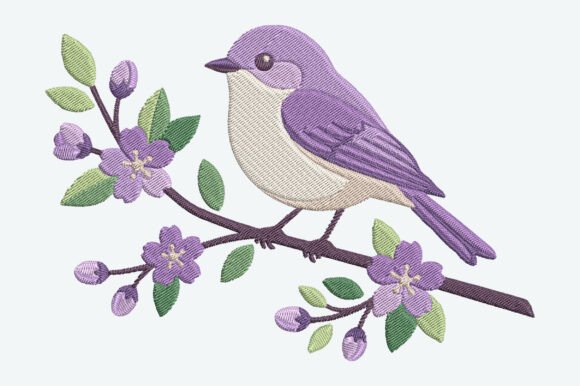
Lavender Bird Embroidery Design
A Designer’s First Impression: Calm, Refined, and Deeply Gift-Ready
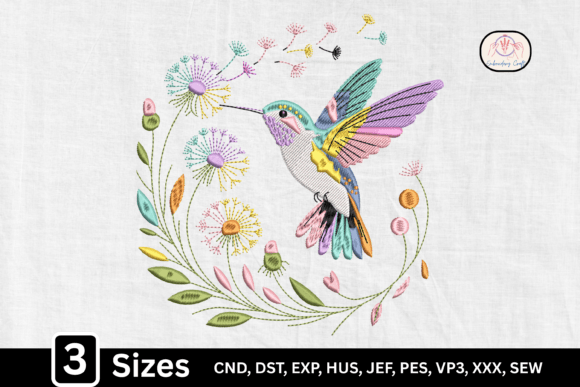
Opening the Lavender Bird Embroidery Design file felt like unrolling a quiet spring morning—soft light, gentle movement, and unmistakable intention. As an embroidery designer who’s tested hundreds of machine embroidery designs for personalized gift shops, I immediately noticed how this one balances delicacy with presence. The bird isn’t stylized or cartoonish; it’s poised, serene, with subtle wing curvature and finely rendered feather texture. Lavender sprigs wrap around it organically—not rigidly symmetrical, but gracefully asymmetrical—evoking hand-drawn charm without sacrificing stitch stability. It reads as elegant, not fussy; peaceful, not passive. This isn’t a seasonal trend piece—it’s timeless nature embroidery with emotional resonance. Customers seeking meaningful baby embroidery, wedding gifts, or family keepsakes will feel that sincerity before they even see it stitched.
Where It Shines: Real-World Uses for Handmade Sellers
The Lavender Bird Embroidery Design thrives where personal meaning meets everyday beauty. On a 100% cotton baby blanket? Exquisitely tender—ideal for newborn announcements or nursery decor. Stitched onto a linen pillow cover in muted lavender and dove-gray thread? Instant heirloom energy for a wedding gift or anniversary present. Applied to a flour-sack kitchen towel? It transforms utility into quiet luxury—perfect for Etsy sellers curating “slow living” collections. A custom tote bag with this design becomes more than carry-all—it’s a conversation starter, a wearable moment of calm. For craft fair vendors, it elevates small shop products: embroidered aprons for herbalists, linen napkins for farm-to-table dinners, or even delicate sachets with a single-stem lavender accent beside the bird. Because it’s rooted in Birds and Embroidery tradition yet feels fresh, it bridges classic craftsmanship and modern gifting sensibilities.
Thoughtful Placement: Where to Use It—and Where to Pause
This design invites intimacy, so placement matters. It performs beautifully on stable, medium-weight fabrics: quilting cotton, linen blends, lightweight canvas, and smooth terry (for embroidered towels). But caution is wise on stretchy baby onesies—without precise digitizing adjustments, fine stems or tiny flower centers may distort. Thick, loop-heavy towels demand extra stabilizer and possibly reduced stitch density to avoid puckering. Curved surfaces—like mugs or curved tote handles—require careful hooping and mockup testing; the design’s gentle flow doesn’t auto-adapt to curves. On dark fabric, contrast is essential: test thread colors against navy, charcoal, or deep sage—avoid near-black threads that mute lavender’s softness. And while it’s lovely on lightweight blankets, avoid high-wear zones like blanket corners unless you reinforce stitching or confirm commercial-grade durability in the embroidery file.
Why It Builds Trust—and Why Customers Keep Coming Back
Gift buyers don’t just buy thread and fabric—they buy feeling. The Lavender Bird Embroidery Design delivers quiet confidence: it signals care, attention to detail, and reverence for natural beauty. That translates directly to perceived value. A customer ordering a personalized gift for a friend’s baby shower doesn’t just want “a bird”—they want reassurance that their sentiment is honored. This design provides that. In product photography, its balanced composition and organic lines photograph cleanly—even on neutral backdrops—boosting Etsy seller visibility and buyer engagement. When customers receive the finished product, the handmade quality reads instantly: no harsh edges, no overcrowded fills, no visual noise. That authenticity fosters repeat orders and word-of-mouth referrals. It’s the kind of embroidery file that makes your shop feel like a trusted curator—not just a vendor.
Practical Notes Every Maker Should Check Before Stitching
Before committing to customer orders, run these checks—especially if you’re a small business owner, digital embroidery file reseller, or custom embroidery studio:
- Test on scrap fabric first—match fiber content and weight to your final product (e.g., test on actual baby blanket fabric, not muslin).
- Verify thread color contrast—lavender tones shift dramatically under different lighting; hold swatches next to your base fabric in natural light.
- Confirm hoop size compatibility—some versions of the Lavender Bird Embroidery Design may be optimized for 4x4, 5x7, or larger hoops; mismatched sizing causes scaling errors.
- Review stitch density—overly dense fills won’t breathe on lightweight linens; sparse areas may look unfinished on dark backgrounds.
- Use appropriate stabilizer—tear-away works for stable cottons; cut-away adds longevity for items like pillow covers or frequently washed embroidered towels.
- Compare light and dark fabric mockups—a printable mockup saves time and avoids costly re-stitching.
- Inspect small details post-stitch—check feather tips, lavender bud definition, and stem continuity under magnification.
- Confirm commercial licensing—if selling finished products (blanket embroidery, custom tote bags, etc.), ensure your purchase includes commercial embroidery rights. When in doubt, contact the designer or platform directly.
Final Thought: More Than a Design—A Gifting Language
The Lavender Bird Embroidery Design isn’t just another Birds-themed embroidery file. It’s a quiet invitation—to slow down, to honor transitions (baby’s arrival, marriage, new home), to choose beauty over busyness. For Etsy sellers building a brand around intentionality, for wedding gift designers crafting memory objects, for baby product creators stitching love into every seam—it’s a reliable, emotionally intelligent tool. It doesn’t shout. It settles in. And in a market flooded with fast-made digital embroidery files, that grounded, graceful presence is exactly what makes a personalized gift unforgettable.