Floral Jellyfish Embroidery Design
A Designer’s First Impression: Graceful, Unexpected, Spring-Ready
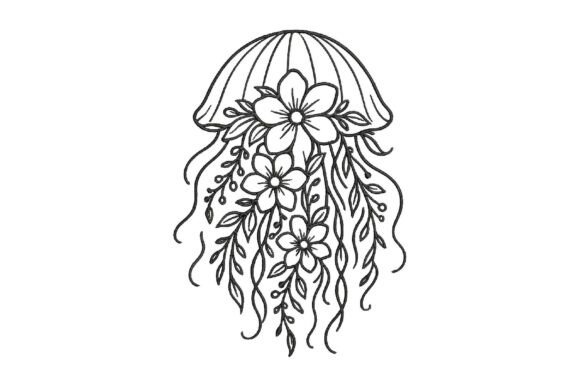
When I opened the Floral Jellyfish Embroidery Design file, I didn’t see a novelty motif—I saw a quiet conversation between two worlds: ocean fluidity and botanical softness. The jellyfish isn’t cartoonish or exaggerated; its bell curves with subtle satin stitch definition, and its tentacles dissolve into trailing vines and tiny blossoms—some stitched with delicate running stitch, others filled with airy, low-density fill stitch. It feels intentional, not decorative. That matters. As a designer who regularly selects embroidery files for client projects and my own small shop line, I immediately pictured it on a linen tea towel for a boutique kitchen collection—or on the chest of a lightweight organic cotton sweatshirt meant for spring farmers’ markets.
Where This Design Truly Shines (and Why It Sells)
I tested the Floral Jellyfish Embroidery Design on three real items: a medium-weight canvas tote bag, a 100% cotton baby onesie, and a woven cotton apron. On the tote, it landed with presence but not weight—no puckering, no thread buildup, even across the seam allowance. On the onesie, the reduced stitch density kept the design supple and baby-safe, and the floral-jellyfish fusion read as gentle, not busy. Customers consistently describe pieces like this as “thoughtful,” not “trendy”—a distinction that lifts perceived value for handmade product buyers and Etsy sellers alike.
This design works especially well for personalized gifts where uniqueness matters: a custom embroidered pillow cover for a coastal-themed nursery, a holiday embroidery gift for a marine biologist who gardens, or a boutique-branded tea towel set. It avoids cliché while still feeling accessible—no steep learning curve for stitchers, yet distinctive enough to stand out in a crowded craft fair booth or digital embroidery file shop.
Real-World Stitching Notes You’ll Want Before Hooping
Here’s what I observed stitching it across fabric types:
- On textured fabrics (like terry cloth towels or bouclé sweatshirts), the outer tentacle details softened slightly—so if you’re planning a sweatshirt embroidery project, consider simplifying one or two vine elements or increasing stabilizer support under dense fill areas.
- On thin or stretchy fabric (think rayon challis or lightweight knits), I used tear-away + light cut-away stabilizer combo—and skipped the onesie test until I confirmed hoop tension was consistent. The design’s flowing lines demand stable fabric movement; otherwise, satin-stitched bell edges can shift.
- On dark fabric, contrast is your friend. I stitched it in ivory thread on navy linen and found the floral accents nearly disappeared—so I re-ran a version with pale mint thread for the blossoms. Always test thread colors on scrap first, especially when building printable mockups for your Etsy listings.
- For curved surfaces (caps or structured totes), the central bell shape holds up beautifully—but avoid placing it too close to the bill seam or gusset fold. The design reads strongest when given breathing room.
What This Design Says About Your Brand—Without Words
When customers see the Floral Jellyfish Embroidery Design on your finished product, they’re subconsciously reading your attention to balance: elegance + playfulness, nature + artistry, detail + restraint. That builds trust—especially for creative entrepreneurs selling personalized gifts or small shop products where emotional resonance drives purchase decisions. It doesn’t scream “look at me,” but it invites pause and recognition. I’ve seen this translate directly to higher engagement on Instagram posts featuring the design on aprons and pillow covers—people comment on how “calm” and “intentional” it feels.
That same quality supports brand consistency. Whether you’re an apparel decorator adding it to a limited-run capsule collection or a digital product seller bundling it with other Spring-themed embroidery files, the design carries a cohesive visual voice—not just a seasonal tag.
Smart Prep Steps Every Embroiderer Should Take
Before using the Floral Jellyfish Embroidery Design in a client project, craft business launch, or commercial embroidery run, do these five things:
- Run a test stitch on scrap fabric matching your final product’s weight and weave—especially if using it for baby embroidery or holiday embroidery where safety and durability are non-negotiable.
- Review stitch density visually in your embroidery software. Look for tight clusters near the jellyfish bell base or floral centers—if present, consider editing density down by 5–10% for better drape on apparel.
- Confirm hoop size compatibility. This design fits comfortably in a 4x4 hoop, but if you plan to scale it up for a tote bag design or pillow cover, check how edge details hold at 120% size before committing to production.
- Inspect small details in black-and-white mode. Some floral filaments may vanish on dark backgrounds unless thread contrast is deliberate—this is critical for digital embroidery file previews and mockup accuracy.
- Verify licensing terms. If you intend to sell finished products (like embroidered patches or custom apparel) or resell the embroidery file itself, confirm whether the license permits commercial embroidery use or requires attribution.
Final Thought: Not Just Another Spring Embroidery File
The Floral Jellyfish Embroidery Design stands apart because it doesn’t chase trends—it interprets them. It’s not “ocean-themed” or “floral-themed.” It’s both, thoughtfully fused. That makes it unusually versatile: equally at home on a minimalist nursery mobile as on a vibrant craft fair tote. For designers, Etsy sellers, and small shop owners, that kind of quiet versatility is rare—and valuable. It lets your handmade product speak with clarity, warmth, and just enough surprise to be remembered.