Daisy Flowers Butterflies Embroidery
A Cheerful, Light-Hearted Design That Feels Like Spring in Stitch Form
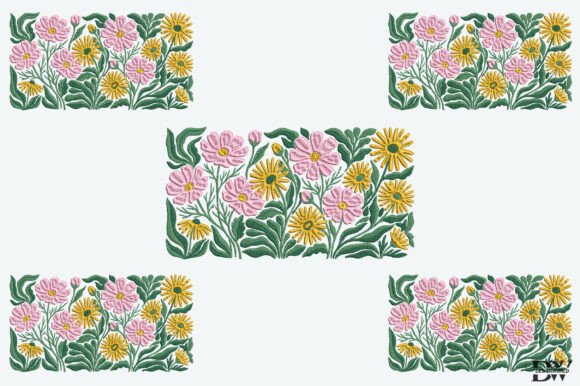
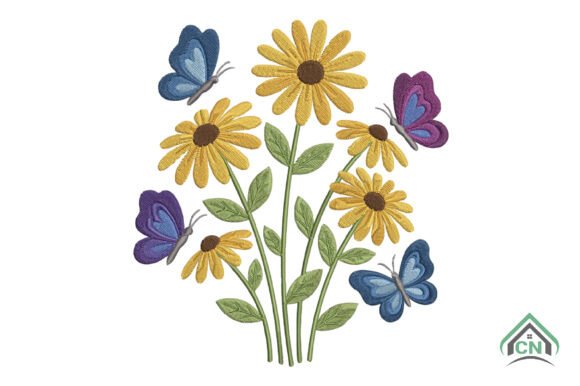
First impression? Daisy Flowers Butterflies Embroidery lands softly—not loud, not busy, but quietly confident in its charm. It’s the kind of machine embroidery design that invites a smile before you even thread your needle. The daisies aren’t overly stylized or cartoonish; they hold botanical sincerity with just enough simplicity to read clearly at 3–4 inches wide. The butterflies float with gentle asymmetry—wings slightly angled, one perhaps higher than the other—giving motion without chaos. This isn’t a dense floral explosion. It’s airier. Lighter. Designed for breathing room, not filling space.
Where It Shines: Real Projects That Feel Thoughtfully Made
I recently tested Daisy Flowers Butterflies Embroidery on a natural linen tote bag for a local boutique launch—and it worked beautifully. The design sat cleanly on the shoulder strap seam, neither overwhelming the fabric nor disappearing into its texture. Because the stitch density leans moderate (not heavy fill, not sparse running stitch), it held up across washes and daily use without puckering or stiffening. That same balance makes it ideal for baby embroidery: think onesies, burp cloths, or crib bumpers where softness and safety matter. On a lightweight cotton sweatshirt? It reads clearly without weighing down the garment. As an embroidered patch sewn onto a denim apron? The daisies pop against indigo, and the butterflies add just enough whimsy for a kitchen-themed small shop product.
For Etsy sellers and craft business owners, this design bridges personalization and professionalism. It’s versatile enough for wedding guest favors (embroidered on muslin pouches), holiday embroidery (think Easter tea towels or spring baby blankets), or even subtle branding on boutique packaging—say, stitched onto the corner of a reusable gift wrap cloth. Its visual personality supports handmade presentation without shouting. Customers notice the care, not the clutter.
Where to Pause—and Why
Daisy Flowers Butterflies Embroidery isn’t built for micro-detail work. If you’re stitching on a curved surface like a cap or structured beanie, test placement carefully—the butterfly wings near the outer edges may distort if hooped too tightly or placed over seams. On stretchy fabrics like jersey or thin knits, stabilizer choice becomes non-negotiable: a medium-weight cutaway or tear-away works best, especially under the daisy centers where satin stitch detail gathers.
Dark fabric demands attention too. Those delicate white or pale yellow daisy petals need strong thread color contrast—test your chosen palette on scrap first. And while the design avoids tiny lettering or ultra-fine lines, the inner wing veins and petal outlines do rely on clean stitch execution. On textured fabrics like terry cloth or heavy burlap, those details can blur. I’d avoid using it on layered garments (like quilted jackets) unless you’re willing to adjust underlay or reduce density manually.
Design Assets That Support, Not Complicate, Your Workflow
As a designer who evaluates hundreds of embroidery files a year, what stands out about Daisy Flowers Butterflies Embroidery is how little it asks of you. It doesn’t require complex digitizing tweaks to scale well between 2.5” and 5”. No nested applique layers mean fewer thread changes and smoother transitions across projects. That matters when you’re juggling custom apparel orders or prepping for a craft fair—less time troubleshooting, more time creating finished product.
It also translates cleanly into printable mockups. Whether you’re building an Etsy listing or pitching to a boutique buyer, Daisy Flowers Butterflies Embroidery holds up in black-and-white previews and light/dark background comparisons. That reliability builds customer trust: when buyers see consistent, crisp digital embroidery file previews—and then receive a finished product that matches—it reinforces your brand consistency and professionalism.
Practical Notes Every Embroidery Designer Should Run Through
- Test on scrap fabric first—especially if pairing with textured or dark materials.
- Check thread color contrast early: light daisies need rich backing or high-contrast stabilizer to prevent shadowing.
- Review stitch density visually, not just numerically—if your machine struggles with tight fills, consider reducing density by 5–8% for breathable wearables.
- Confirm hoop size compatibility before committing to production runs—some versions may require 4x4”, others 5x7”.
- Inspect small details at actual stitch-out size: those butterfly wing tips should land crisply, not fray or feather.
- Use proper stabilizer—lightweight cutaway for knits, tear-away for stable wovens, no-show mesh for sheer fabrics.
- Verify licensing terms before selling finished items or bundling as design assets—Daisy Flowers Butterflies Embroidery falls under Single Flowers Plants, but commercial use rights must be confirmed directly with the source.
Final Thought: A Design That Serves the Maker—and the Customer
Daisy Flowers Butterflies Embroidery doesn’t try to be everything. It’s not a statement piece meant for center-stage logos, nor is it a filler motif for bulk orders. It’s a considered, seasonal accent—a quiet signature for makers who value clarity, charm, and craftsmanship. When used intentionally—on a linen pillow cover for a nursery, a personalized gift tag for a spring birthday, or a small-batch line of embroidered kitchen towels—it elevates the handmade product without overshadowing the maker’s voice. That’s rare. And that’s why, after years of reviewing embroidery files, I keep coming back to designs like this: simple enough to execute well, distinctive enough to remember, and joyful enough to make both creator and customer pause and smile.