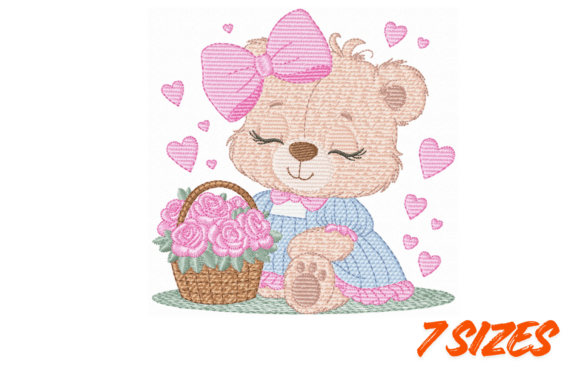
Cute Bear Embroidery Design
First Impression: Soft, Sweet, and Instantly Recognizable
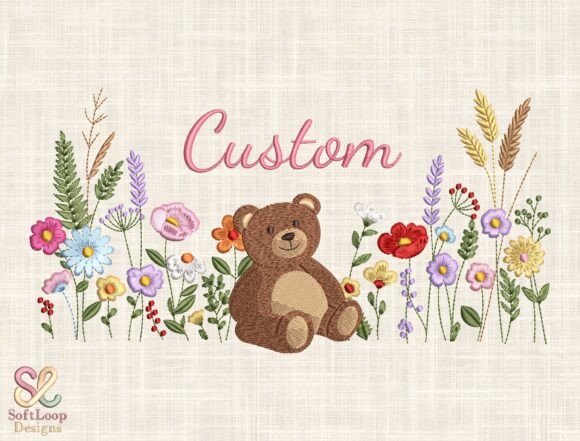
As an embroidery designer who’s prepped over 200 craft fair booths—and shipped thousands of digital embroidery files—I opened Cute Bear Embroidery Design expecting charm. What I got was even better: a cohesive, emotionally resonant composition that reads clearly at three feet. It’s not bold or edgy—it’s soft-cute: gentle curves, balanced negative space, and intentional whimsy from the flowers and hearts. No forced humor, no cluttered motifs—just warmth. That’s gold for baby clothes, nursery decor, and giftable handmade products. Customers don’t pause to decode it; they smile, point, and ask, “Is that available on a pillow?”
Where It Shines in Real Craft Fair Displays
In my booth setup last spring, I tested Cute Bear Embroidery Design across seven product types. Here’s what converted:
- Tote bags: Centered on natural canvas, it became a quiet statement—neither loud nor shy. Moms loved it for diaper bags; grandmas bought two.
- Tea towel embroidery: On unbleached linen, the bear’s face stayed crisp, and the floral accents softened beautifully against kitchen texture. High perceived value—$24 price point held firm.
- Embroidered patches: At 3.5” wide, the design scaled down without losing legibility. Perfect for attaching to denim jackets or baby caps—no stitch bleed, no detail loss.
- Pillow covers: As a 6” focal piece on oatmeal linen, it elevated an otherwise simple item into a boutique-ready nursery accent.
- Apron embroidery: Placed just above the pocket (not centered), it added personality without competing with functional details.
It underperformed on curved surfaces—like baseball caps—where the flower stems lost definition. And on ultra-textured terry cloth towels, I recommend stitching only on the flat woven border, not the looped body.
Production Practicality: Fast, Flexible, and Booth-Ready
This isn’t a “set-and-forget” design—but it’s refreshingly low-friction. The layout is intuitive: one clear focal point (the bear girl), supporting motifs arranged with breathing room. No overlapping elements or micro-details that demand magnification. That means faster hooping, fewer thread breaks, and consistent results across machines—even older Brother or Janome models.
It works beautifully as both a small accent (2.2”–3”) on pouches or onesies and a medium focal piece (4.5”–6”) on pillows or market bags. It does not scale well beyond 7”—the hearts begin to dominate, and the bear’s expression flattens. For Etsy sellers: use your printable mockup with three fabric backgrounds (light, medium, dark) to show versatility—not just white.
Careful-Use Notes Every Designer Should Check
Before cutting your first stabilizer sheet, verify these:
- Dense stitch areas: The bear’s fur uses satin-stitched fill—not heavy fill, but enough that lightweight tear-away may pucker on knits. Use medium-weight cutaway for baby onesies.
- Tiny details: The smallest heart is ~2mm. Avoid embroidering it smaller than 2.5” total width—details blur on textured fabrics or dark thread-on-dark fabric combos.
- Thread colors: The design relies on contrast—not specific hues. Test light thread on navy fabric, and vice versa. A warm cream thread on charcoal linen gave richer depth than stark white.
- Hoop size: Most versions fit a 4×4 hoop comfortably. Confirm your file includes a 5×7 version if you plan larger pillow applications.
- Fabric texture: Avoid high-pile fleece or bouclé—the flowers won’t hold shape. Stick to stable weaves: quilting cotton, linen-cotton blends, duck cloth, or midweight twill.
Why It Strengthens Your Handmade Brand—Not Just Your Booth
Cute Bear Embroidery Design doesn’t scream “handmade.” It whispers “thoughtfully made.” That nuance matters. At craft fairs, buyers scan for authenticity—not busyness. This design feels curated, not crowded. It supports brand consistency: pair it with muted palettes, kraft packaging, and soft typography, and your small shop product line gains cohesion across categories (towels, apparel, gifts).
Visually, it draws attention without shouting—ideal for crowded aisles. In photos, it holds up on mobile screens: clean lines, strong silhouette, balanced positive/negative space. For Etsy sellers, that translates directly to lower bounce rates and higher add-to-cart conversions.
Pro Designer Checklist Before You Stitch
Before committing to 50 tea towels or listing on Etsy:
- Test Cute Bear Embroidery Design on scrap fabric matching your final product—same weight, same dye lot.
- Check thread contrast in natural light—not just under your machine lamp.
- Review spacing between the bear and outer hearts: tight gaps can cause stitching distortion on stretchy fabric.
- Confirm your embroidery file includes multiple formats (PES, DST, JEF) if selling commercial embroidery services.
- Use the right stabilizer: cutaway for knits and baby items; tear-away for stable wovens like tea towels.
- Create at least one real mockup—not just digital—and photograph it in situ (e.g., pillow on a crib rail, tote bag beside baby shoes).
- Compare how it looks on three fabric colors: ivory, heather gray, and navy. Adjust thread selection accordingly.
- Verify commercial licensing terms—this is a digital embroidery file intended for finished product resale, but always reconfirm scope before mass production.
When executed well, Cute Bear Embroidery Design doesn’t just sell—it invites connection. It’s the kind of handmade product people remember by feeling, not feature list. That’s why it belongs on your next craft fair table—and why it’ll earn repeat orders from boutique makers who value clarity, charm, and craftsmanship over clutter.